
What Foods Help Hormonal Balance — And Why Food Matters More Than You Think
Sometimes your body doesn’t feel completely “off.”
Just… unbalanced.
Your energy fluctuates.
Your mood changes easily.
Your sleep feels inconsistent.
And you start wondering:
“Could food actually help with this?”
The answer is:
Yes—gently, gradually, and naturally.
Because your hormones respond to how supported your body feels every day.
Your Diet Affects More Than Just Weight
Food is not just fuel.
It’s information for your body.
What you eat influences:
- Stress response
- Energy production
- Mood stability
- Reproductive health
- Hormonal signaling
This is why a good
diet for hormone balance
can make a real difference over time.
What Happens When Your Body Lacks Proper Nourishment
Here’s the simple chain:
Stress + Poor Nutrition → Hormonal Imbalance → Energy & Mood Changes
- Stress increases nutritional demand
- Hormones need vitamins, minerals, and healthy fats
- Without support, balance becomes harder to maintain
This can lead to:
- Fatigue
- Mood swings
- Irregular cycles
- Low motivation
- Poor recovery
Hormonal balance is deeply connected to nourishment and lifestyle consistency.
Foods That Naturally Support Hormonal Balance
The goal is not perfection.
It’s support.
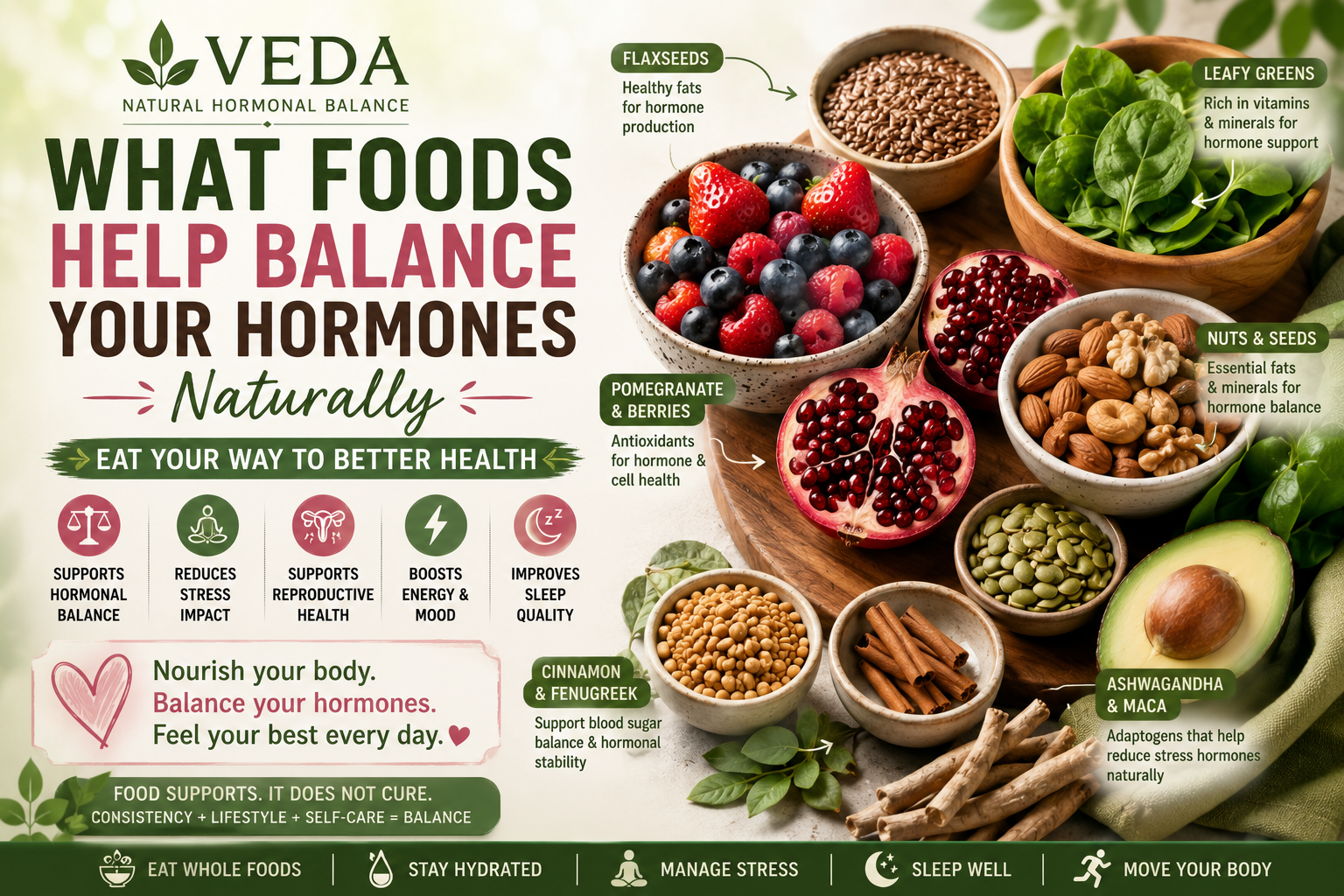
🥑 1. Healthy Fats (Important for Hormones)
Hormones are built from healthy fats.
Helpful foods include:
- Flaxseeds
- Nuts
- Seeds
- Avocados
Especially flaxseed, which supports hormone signaling and healthy estrogen metabolism.
These are excellent
foods for estrogen balance.
🥬 2. Nutrient-Dense Greens
Your hormones need micronutrients.
Supportive foods include:
- Moringa
- Spinach
- Leafy greens
These help replenish the body gently.
🍓 3. Antioxidant-Rich Foods
Stress creates oxidative pressure inside the body.
Supportive foods include:
- Pomegranate
- Beetroot
- Berries
These support circulation, energy, and cellular protection.
🌾 4. Blood Sugar Balancing Foods
Hormones respond strongly to blood sugar fluctuations.
Helpful foods include:
- Fenugreek
- Cinnamon
- Whole foods with fiber
Balanced blood sugar helps stabilize energy and mood.
🌿 5. Adaptogenic & Stress-Supportive Herbs
Stress affects hormones more than most people realize.
Helpful herbs include:
- Ashwagandha
- Maca Root
- Morinda (Noni)
These support resilience and hormonal balance naturally.
🫚 6. Digestion-Supportive Foods
Even healthy food only helps if your body absorbs it properly.
Helpful additions include:
- Ginger
- Black Pepper
- Turmeric
These support digestion and nutrient absorption.
A Gentle Truth Most People Need to Hear
You don’t need a “perfect diet.”
You need consistency.
Hormonal balance is not built from extreme restrictions.
It’s built from:
- Nourishment
- Rhythm
- Recovery
- Supportive habits
Food becomes powerful when it’s sustainable.
Signs Your Body May Need More Nutritional Support
You may notice:
- Energy crashes
- Mood swings
- Feeling drained despite eating
- Poor sleep
- Hormonal fluctuations
- Irregular appetite
These are often signs your body needs deeper nourishment—not punishment.
Small Food Habits That Help More Than You Think
Start simple:
- Eat meals consistently
- Include healthy fats daily
- Reduce ultra-processed foods gradually
- Stay hydrated
- Don’t skip meals under stress
- Add more colorful, whole foods
Small habits create long-term balance.
A Reassuring Perspective
Food is not a cure.
And your body doesn’t need fixing.
It needs support.
That’s why preventive wellness focuses on helping the body feel safe, nourished, and balanced before bigger problems appear.
A Thought to Carry Forward
Your meals are not just about hunger.
They are daily signals to your body.
And over time, those signals shape your energy, mood, and hormonal rhythm.
Support your body gently, consistently, and patiently.
FAQ Section
— Always consult a healthcare provider before starting new supplements, especially if you have underlying conditions.