
You’re Working Out… So Why Are You Still Exhausted?
You’re going to the gym.
You’re trying to eat better.
You’re pushing yourself consistently.
You’re doing “everything right.”
So what gives?
Why do you still feel:
- Drained after workouts
- Low on energy throughout the day
- Mentally exhausted instead of energized
If this sounds familiar, you’re not lazy.
And you’re definitely not imagining it.
When Fitness Starts Feeling Like More Pressure Than Progress
Exercise is supposed to help you feel stronger.
But sometimes…
Your body feels like it’s struggling to keep up.
You may notice:
- Feeling tired after exercise for hours
- Needing extra caffeine just to train
- Slow recovery between workouts
- Poor sleep despite exhaustion
- Mood irritability or low motivation
- Feeling physically “flat” or burnt out
This is where people begin wondering:
“Is workout fatigue hormonal?”
And honestly…
Sometimes it can be connected.
What’s Happening Inside Your Body (Simple Explanation)
Exercise itself is not the problem.
The issue is when stress and recovery become unbalanced.
Here’s the simple chain:
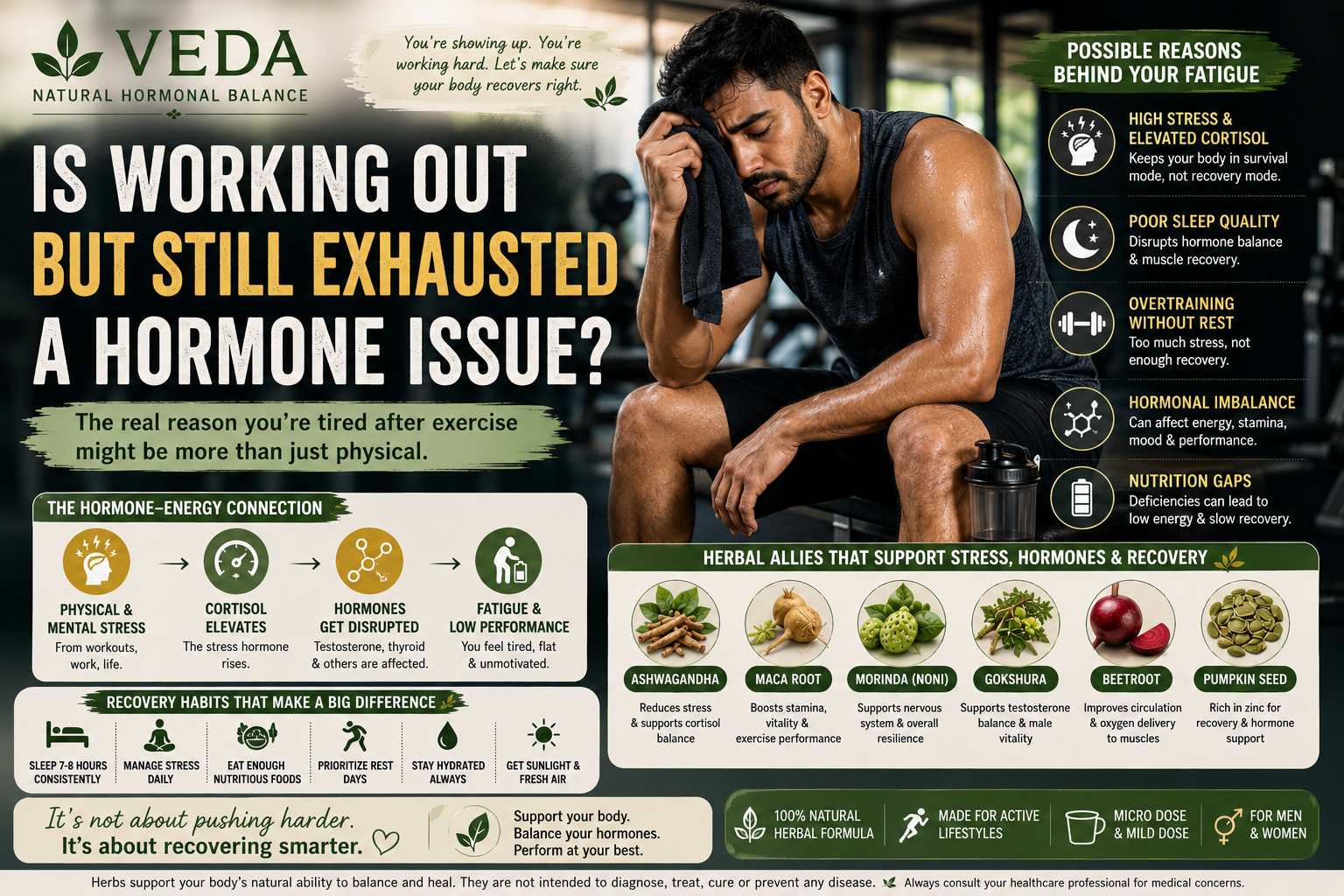
Physical Stress + Mental Stress → Cortisol → Recovery Disruption → Fatigue
- Intense workouts increase stress demand on the body
- Poor sleep or emotional stress keeps cortisol elevated
- Hormonal recovery becomes harder
- Energy and performance begin dropping instead of improving
This is one reason behind
exercise fatigue hormones.
Stress-related hormonal imbalance can affect recovery, stamina, motivation, and overall vitality—especially in active individuals.
Why You Feel Tired After Exercise All Day
Many gym-goers assume they need to train harder.
But sometimes the body is asking for the opposite:
- Better recovery
- Better sleep
- Better stress regulation
- Better nourishment
Because fitness gains don’t happen during the workout.
They happen during recovery.
And when your nervous system stays overloaded…
Your body struggles to rebuild energy properly.
Signs Your Body May Be Overstressed
You might relate to these:
- Constant soreness or fatigue
- Low motivation to train
- Brain fog after workouts
- Irritability or emotional exhaustion
- Sleep that doesn’t feel refreshing
- Feeling weaker despite consistent effort
These are often signs your body needs support—not punishment.
The Stress-Hormone Connection Most Fitness People Ignore
Many active people focus only on:
- Protein
- Supplements
- Workout intensity
But forget one major thing:
Stress hormones.
When cortisol stays elevated for too long:
- Recovery slows
- Testosterone balance may be affected
- Sleep quality drops
- Energy becomes unstable
This is why
gym but no energy
is more common than people realize.
The body cannot perform optimally when it constantly feels under pressure.
Understanding Natural Support (Recovery + Hormonal Balance)
The goal is not to “push harder.”
It’s to recover better.
🌿 Adaptogenic Stress Support
- Ashwagandha → supports stress hormone balance and recovery
- Maca Root → supports stamina, resilience, and vitality
- Morinda (Noni) → supports nervous system balance
These herbs are commonly associated with stress adaptation and hormonal support.
⚡ Circulation & Workout Recovery Support
- Beetroot → supports oxygen delivery and circulation
- Watermelon Extract → supports nitric oxide pathways and tissue nourishment
These help support physical endurance and recovery.
💪 Male Vitality & Performance Support
- Gokshura → supports testosterone balance and physical vitality
- Pumpkin Seed & Brazil Nut → provide zinc and selenium support linked to reproductive and hormonal wellness
Because performance and hormonal balance are connected.
🧬 Nutritional & Cellular Support
- Moringa → provides micronutrient support
- Pomegranate → supports antioxidant and cellular recovery
Recovery is not just muscular—it’s systemic.
Small Recovery Habits That Actually Matter
Most people underestimate these:
- Sleep at consistent times
- Take rest days seriously
- Avoid overtraining under emotional stress
- Eat enough to recover properly
- Stay hydrated
- Get sunlight and slow movement outside the gym
Recovery is productive too.
A Perspective Worth Remembering
You don’t become stronger from stress alone.
You become stronger from balanced stress + proper recovery.
And if your body feels exhausted despite effort…
That’s not weakness.
That’s feedback.
Preventive wellness is about supporting your system before burnout becomes deeper imbalance.
A Thought to Carry Forward
Your body isn’t asking you to quit.
It may just be asking you to recover differently.
Sometimes the answer isn’t more intensity.
It’s more balance.
Support your body gently, consistently, and before exhaustion becomes your normal.
FAQ Section
— Always consult a healthcare provider before starting new supplements, especially if you have underlying conditions.