
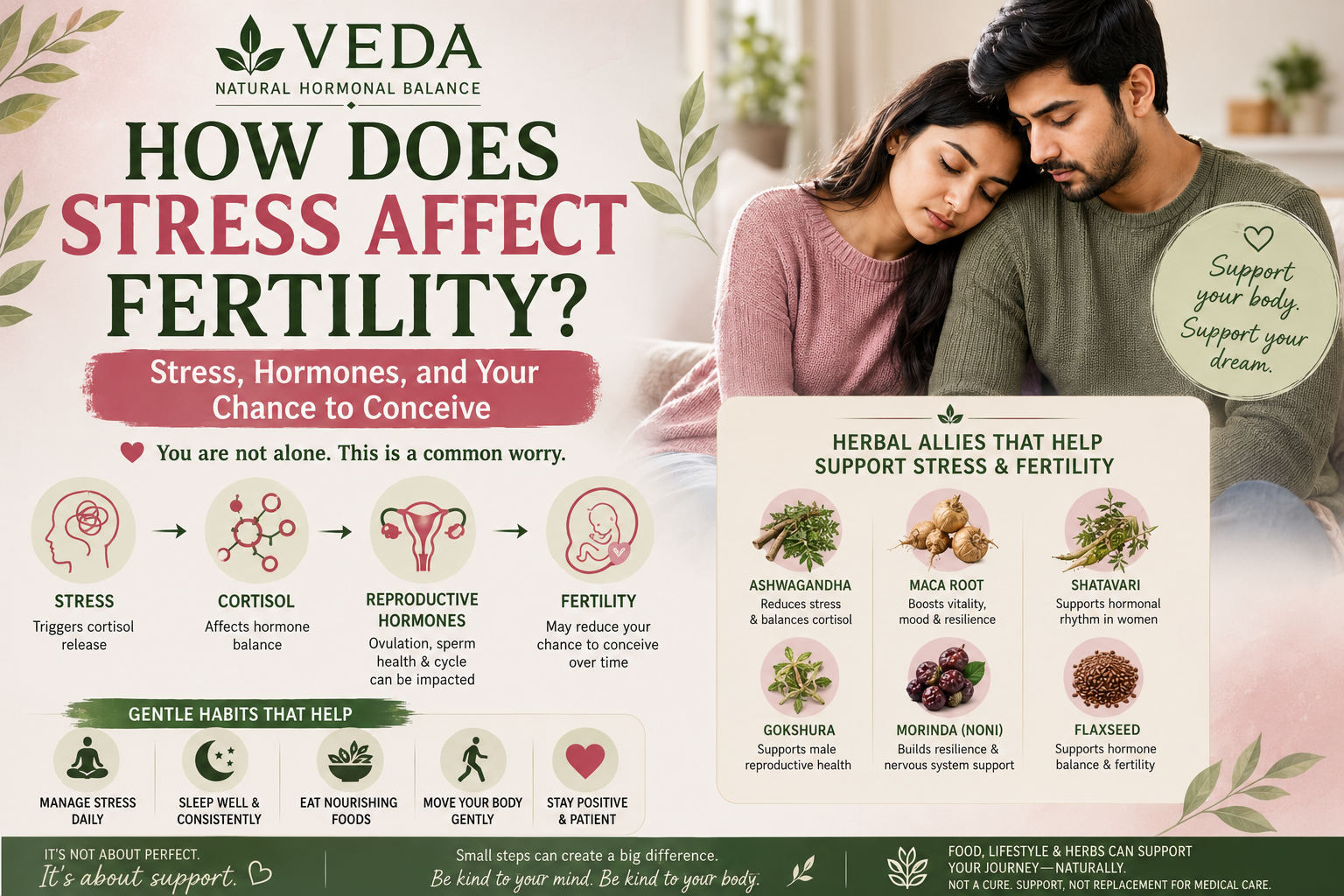
How Does Stress Affect Fertility?
If you’re trying to conceive, this question has probably crossed your mind more than once:
“Can stress really affect fertility?”
And honestly…
This is a very common worry.
Especially when:
- Months feel emotionally heavy
- Cycles become stressful to track
- Every delay feels personal
Trying to conceive can quietly become a source of pressure.
And your body feels that pressure too.
When Hope Slowly Turns Into Stress
At first, it feels exciting.
But over time, many couples begin experiencing:
- Overthinking every symptom
- Anxiety around timing
- Emotional exhaustion
- Frustration after negative tests
- Constant mental pressure
This is where
stress and getting pregnant
start becoming emotionally connected.
Not because stress “causes infertility” directly—
But because the body responds to prolonged pressure.
What’s Happening Inside Your Body (Simple Explanation)
Your reproductive system depends heavily on hormonal balance.
And stress hormones can interfere with that balance.
Here’s the simple chain:
Stress → Cortisol → Hormonal Signals → Fertility Changes
- Stress raises cortisol levels
- Cortisol influences reproductive hormones
- Ovulation and sperm health can become less stable
- The body shifts away from “reproductive readiness”
This is known as the
cortisol fertility connection.
Stress-linked hormonal disruption can affect cycle rhythm, ovulation quality, sperm vitality, and overall reproductive wellness.
How Stress Can Affect Women’s Fertility
Stress may contribute to:
- Irregular menstrual cycles
- Delayed ovulation
- Hormonal fluctuations
- Emotional exhaustion
The body sometimes delays reproductive processes when it feels overloaded.
This does not mean something is permanently wrong.
It means your system is asking for support.
Stress and hormonal imbalance are commonly linked to cycle irregularity and ovulatory disruption.
How Stress Can Affect Men’s Fertility
Men experience stress-related fertility effects too.
Stress may influence:
- Testosterone balance
- Sperm quality and motility
- Libido and performance confidence
- Sleep and recovery
Ongoing mental pressure can reduce reproductive readiness over time.
A Very Important Reassurance
Stress is not the whole story.
And this is important to hear:
You are not “failing” because you feel stressed.
Fertility depends on many factors:
- Hormones
- Nutrition
- Lifestyle
- Sleep
- Emotional health
Stress is one piece—not the entire picture.
But supporting stress levels can help create a healthier internal environment.
Understanding Natural Support (Stress + Fertility Focus)
The goal is not to “force fertility.”
The goal is to support balance.
🌿 Stress & Hormonal Balance
- Ashwagandha → supports stress hormone regulation
- Morinda (Noni) → supports nervous system resilience
Because stress affects reproductive hormones directly.
🌸 Female Reproductive Support
- Shatavari → supports hormonal rhythm and ovarian wellness
- Flaxseed → supports hormone signaling and estrogen balance
These are traditionally used for female hormonal support.
💪 Male Reproductive Support
- Gokshura → supports male vitality and reproductive health
- Brazil Nut (Selenium) → supports sperm wellness and antioxidant defense
Male fertility is strongly connected to stress recovery too.
⚡ Energy & Recovery Support
- Maca Root → supports vitality, mood, and resilience
- Beetroot & Pomegranate → support circulation and cellular protection
Reproductive health depends on overall wellness—not just one system.
Gentle Habits That Support Fertility Naturally
You don’t need perfection.
You need consistency and calm support.
Small habits matter:
- Prioritize sleep quality
- Reduce constant stress tracking
- Take breaks from fertility-related overthinking
- Eat nourishing meals regularly
- Stay physically active without overexhaustion
- Spend time outdoors and away from screens
These habits support hormonal rhythm gently over time.
A Perspective Worth Holding On To
Your body is not working against you.
It’s responding to its environment.
And when that environment becomes calmer, safer, and more supported…
Hormonal balance often responds too.
Preventive wellness is not about fear.
It’s about early support, emotional reassurance, and giving your body what it needs before deeper imbalance develops.
A Thought to Carry Forward
Fertility is not just physical.
It’s emotional, hormonal, and deeply connected to how supported your body feels internally.
And sometimes…
The most powerful thing you can do is stop fighting your body and start supporting it gently.
Start supporting your body before it starts asking louder.
FAQ Section
— Always consult a healthcare provider before starting new supplements, especially if you have underlying conditions.