
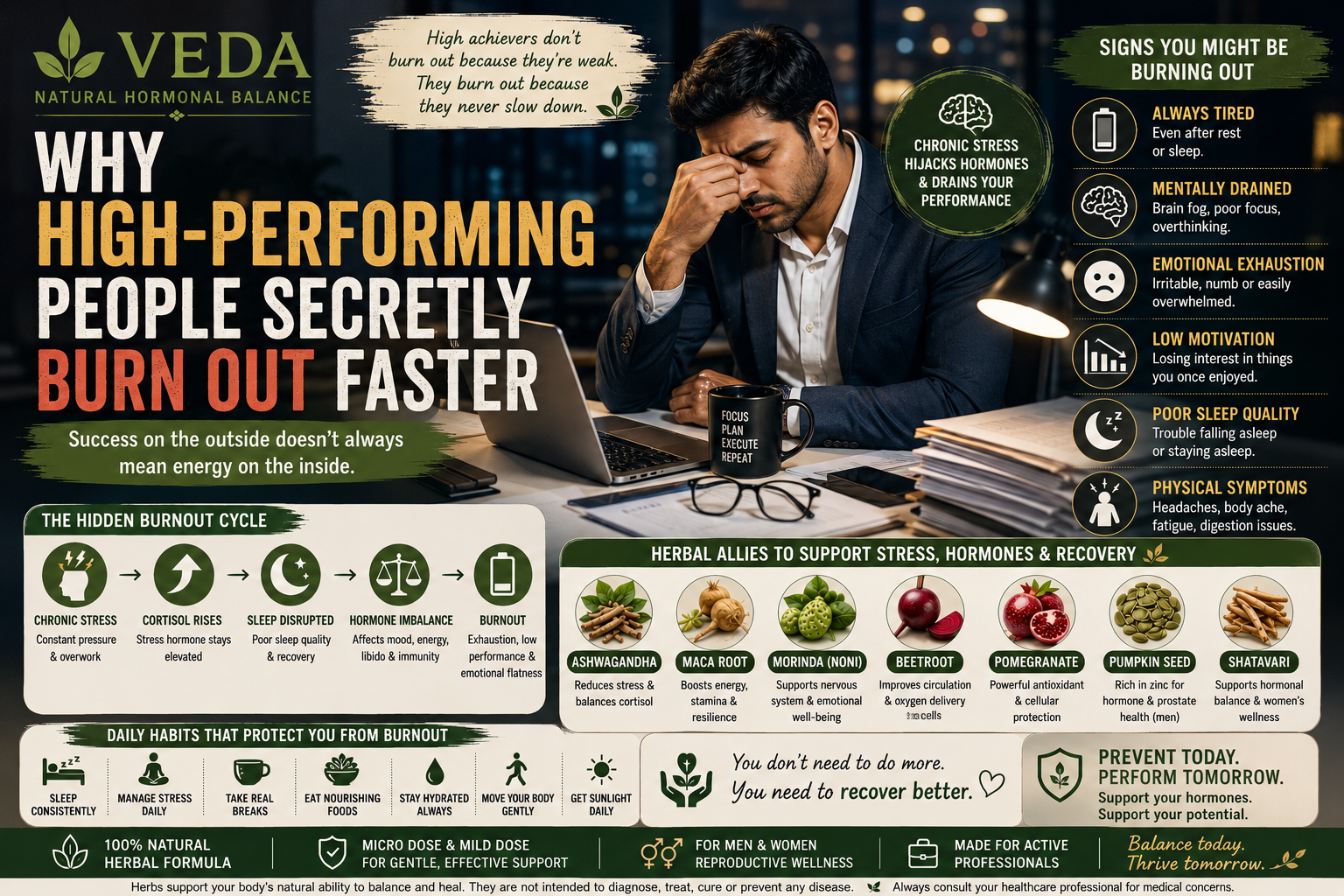
Why Do High-Performing People Burn Out So Quietly?
From the outside…
They look successful.
They stay productive.
They keep showing up.
They handle pressure well.
People even admire how much they can manage.
But internally?
They’re exhausted.
This is the hidden reality of
high functioning burnout.
And many people don’t realize they’re experiencing it until their body finally forces them to slow down.
The Problem With “Always Being Strong”
High-performing people often become experts at ignoring exhaustion.
They keep functioning through:
- Stress
- Lack of sleep
- Emotional overload
- Mental fatigue
- Constant pressure
And because they still appear “fine” externally…
Nobody notices how overwhelmed they actually feel.
This is why many
overworked and exhausted
professionals burn out silently.
What High-Functioning Burnout Actually Looks Like
It doesn’t always look dramatic.
Sometimes it looks like:
- Feeling mentally tired all the time
- Losing excitement but continuing anyway
- Constant brain fog
- Low emotional energy
- Feeling restless even while exhausted
- Difficulty relaxing without guilt
- Needing caffeine just to function
Many professionals normalize these
chronic stress symptoms
for years.
What’s Happening Inside Your Body (Simple Explanation)
Your body is designed for temporary stress.
Not nonstop pressure.
Here’s the simple chain:
Chronic Stress → Elevated Cortisol → Hormonal Fatigue → Burnout
- Constant pressure keeps cortisol elevated
- Recovery systems struggle to reset
- Sleep quality declines
- Hormonal balance becomes disrupted
- Mental and physical energy begin dropping together
This is one reason
burnout in professionals
has become so common today.
Chronic stress and burnout are strongly associated with emotional exhaustion, mental fatigue, sleep disruption, low motivation, and hormonal imbalance.
Why High Achievers Burn Out Faster
High performers often:
- Ignore early warning signs
- Attach self-worth to productivity
- Push through exhaustion repeatedly
- Rest physically but not mentally
- Stay emotionally “on” constantly
Eventually, the nervous system stops recovering fully.
And that’s when burnout begins affecting:
- Mood
- Focus
- Motivation
- Sleep
- Hormonal rhythm
- Emotional resilience
Signs You May Be Experiencing High Functioning Burnout
You may relate to this if you:
- Feel productive but emotionally exhausted
- Can’t fully relax even during free time
- Feel tired but keep forcing yourself to work
- Wake up mentally drained
- Feel disconnected from enjoyment or motivation
- Experience irritability or emotional numbness
These are not signs of weakness.
They are signs your system may be overloaded.
A Reassuring Truth Most High Performers Need to Hear
Your body is not betraying you.
It’s trying to protect you.
When stress becomes constant, the body begins conserving energy and reducing emotional resilience to survive ongoing pressure.
That’s not laziness.
That’s biology.
And burnout is often the result of functioning under pressure for too long without enough recovery.
Understanding Natural Support (Stress + Recovery Focus)
The goal is not to become “less ambitious.”
It’s to help your body recover more sustainably.
🌿 Stress & Nervous System Support
- Ashwagandha → supports stress hormone balance and recovery
- Morinda (Noni) → supports resilience and nervous system stability
These herbs are commonly associated with chronic stress support.
⚡ Energy & Burnout Recovery Support
- Maca Root → supports vitality, stamina, and emotional resilience
- Beetroot & Pomegranate → support circulation and cellular recovery
Mental fatigue often affects physical energy too.
🧠 Focus & Emotional Balance Support
- Cocoa → supports emotional well-being
- Flaxseed & Cinnamon → support hormonal and metabolic balance
Mood stability and energy are deeply connected.
🧬 Nutritional Support
- Moringa → provides micronutrients for vitality and recovery
- Ginger & Black Pepper → support digestion and nutrient absorption
Recovery requires nourishment—not just motivation.
Small Changes That Actually Help
Most burnout recovery starts with slowing the nervous system down.
Simple habits matter:
- Sleep consistently
- Stop glorifying overwork
- Take breaks without screens
- Allow recovery without guilt
- Spend time outdoors regularly
- Reduce constant mental stimulation
Consistency matters more than intensity.
A Perspective Worth Holding On To
Being capable does not make you invincible.
And functioning well externally doesn’t mean your body isn’t overwhelmed internally.
Preventive wellness is about supporting yourself before stress becomes deeper imbalance—not waiting until your body completely crashes.
A Thought to Carry Forward
You do not need to earn rest through exhaustion.
And constantly pushing through is not always strength.
Sometimes real strength is recognizing when your body needs support before burnout becomes your identity.
Support your body gently, consistently, and before exhaustion becomes your normal.
FAQ Section
— Always consult a healthcare provider before starting new supplements, especially if you have underlying conditions.