
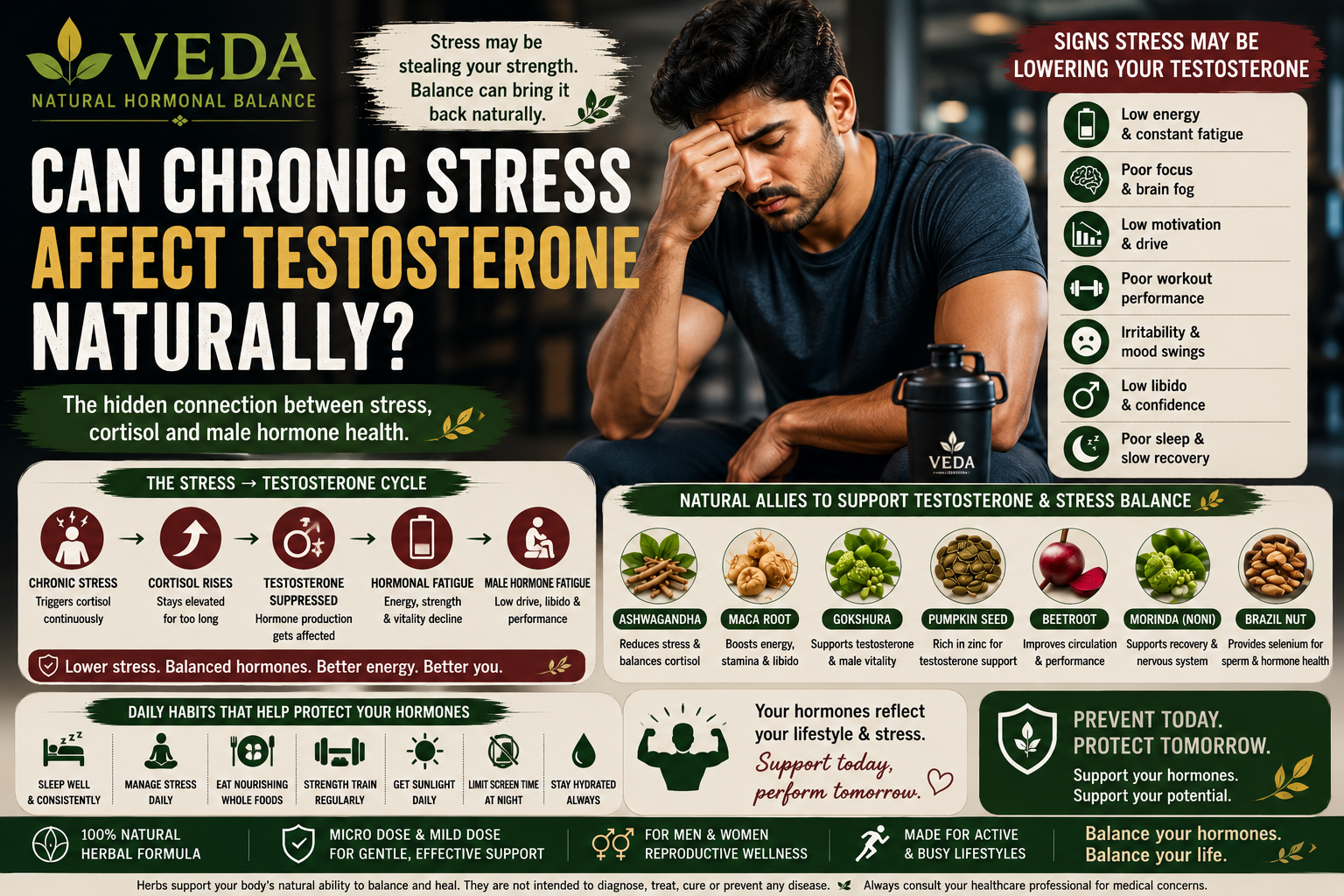
Can Chronic Stress Really Affect Testosterone?
Most men think low testosterone only happens with age.
But many younger men today experience:
- Low energy
- Poor recovery
- Low motivation
- Mental exhaustion
- Reduced drive
And often, stress is sitting quietly in the background.
That’s why more people are asking:
“Can chronic stress affect testosterone naturally?”
The short answer?
Yes—stress and male hormones are deeply connected.
When Stress Stops Feeling “Temporary”
Stress today isn’t always dramatic.
Sometimes it’s:
- Constant pressure to perform
- Work overload
- Financial stress
- Poor sleep
- Emotional exhaustion
- Overtraining without recovery
At first, the body adapts.
But over time…
That constant pressure begins affecting hormonal balance too.
This is where
chronic stress and testosterone
become closely linked.
What’s Happening Inside Your Body (Simple Explanation)
Your body prioritizes survival before performance.
Here’s the simple chain:
Chronic Stress → Cortisol Increase → Testosterone Suppression → Fatigue
- Ongoing stress raises cortisol
- High cortisol affects hormonal signaling
- Recovery and testosterone balance decline
- Energy, motivation, and vitality begin dropping
This creates the
cortisol testosterone imbalance
many men experience without realizing it.
Stress-related hormonal imbalance is commonly associated with low motivation, poor recovery, emotional exhaustion, and reduced testosterone wellness.
Signs Stress May Be Affecting Male Hormones
You may notice:
- Feeling tired even after sleeping
- Reduced motivation or drive
- Low stamina during workouts
- Increased irritability
- Poor recovery after stress or exercise
- Mental fatigue and brain fog
- Reduced confidence or libido
These are common signs of
male hormone fatigue.
Especially during long-term stress overload.
Why Modern Men Experience This More Often
Today’s lifestyle keeps many men in constant stimulation:
- Long work hours
- Screen overload
- Poor sleep quality
- Sedentary habits
- Constant performance pressure
The nervous system rarely gets a full recovery break.
And eventually…
Hormones begin reflecting that pressure.
Men under chronic stress often experience suppressed testosterone, reduced recovery, low vitality, and stress-linked reproductive imbalance.
A Reassuring Truth You Need to Hear
Your body is not “failing.”
It may simply be overwhelmed.
Hormonal imbalance linked to stress is often the body’s response to prolonged pressure—not a personal weakness.
And in many cases, supporting recovery gently can make a meaningful difference over time.
Understanding Natural Support (Stress + Testosterone Focus)
The goal is not to “force hormones.”
It’s to support the systems connected to them.
🌿 Stress & Cortisol Support
- Ashwagandha → supports stress hormone balance and testosterone wellness
- Morinda (Noni) → supports nervous system resilience and recovery
Ashwagandha is commonly associated with stress adaptation and male hormonal support.
💪 Male Vitality & Testosterone Support
- Gokshura → traditionally used to support testosterone balance and reproductive vitality
- Fenugreek → supports hormonal and metabolic wellness
- Pumpkin Seed → provides zinc and reproductive nourishment
These ingredients are commonly linked with male vitality support.
⚡ Energy & Recovery Support
- Maca Root → supports stamina, motivation, and resilience
- Beetroot → supports circulation and oxygen delivery
- Watermelon Extract → supports nitric oxide pathways and tissue nourishment
Because energy and hormone health are deeply connected.
🧬 Cellular & Nutritional Support
- Brazil Nut → provides selenium linked to sperm and antioxidant support
- Moringa → provides micronutrient nourishment
- Pomegranate → supports antioxidant and cellular recovery
A stressed body often needs deeper nourishment too.
Small Lifestyle Changes That Matter More Than People Realize
You don’t need extreme routines.
Start with simple support:
- Prioritize sleep quality
- Reduce constant overstimulation
- Avoid overtraining without recovery
- Eat nourishing meals consistently
- Take real mental breaks during the day
- Get sunlight and movement regularly
Recovery is productive too.
A Perspective Worth Remembering
Testosterone is not only influenced by age.
It’s also influenced by:
- Stress
- Sleep
- Recovery
- Nutrition
- Emotional pressure
Preventive wellness is about supporting these systems early—before imbalance becomes deeper exhaustion.
A Thought to Carry Forward
Your body wants balance.
And sometimes low energy, low drive, and exhaustion are not signs you need to “push harder.”
They may be signs you need better recovery.
Support your hormones the same way you support performance:
With consistency, patience, and care.
Support your body before stress starts controlling your energy.
FAQ Section
— Always consult a healthcare provider before starting new supplements, especially if you have underlying conditions.