
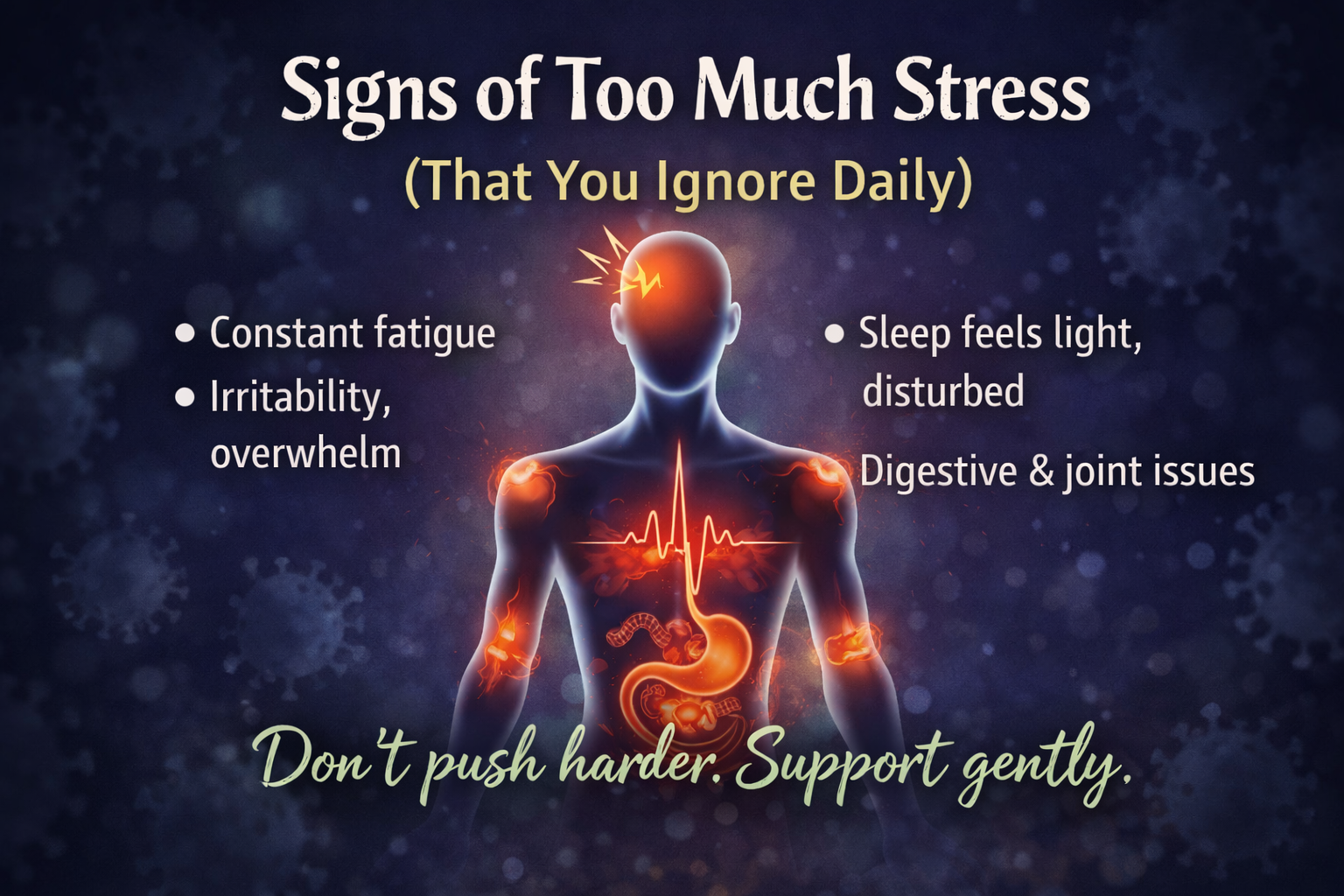
Signs of Too Much Stress — And Why You Don’t Notice Them
You don’t feel “stressed.”
You’re just busy.
Handling things.
Managing life like you always do.
But then…
You feel tired for no reason.
You get irritated easily.
You don’t feel like yourself anymore.
And you brush it off.
Because it doesn’t feel serious enough.
But sometimes, the real signs of too much stress are the ones we normalize.
What Your Daily Life Might Look Like (Without You Realizing It)
You wake up already feeling a bit off.
Not exhausted—but not fresh either.
You go through your day on autopilot.
Work, phone, responsibilities… repeat.
Small things start bothering you more than they should.
You feel mentally tired even without doing much.
By the end of the day,
you just want to switch off.
Not because you worked too hard—
but because your system feels overloaded.
And slowly, this becomes your “normal.”
What’s Happening Inside Your Body (Simple Explanation)
Your body is constantly reading your environment.
When it senses ongoing pressure, it shifts into a stress response mode.
Here’s the simple chain:
Stress → Hormonal Signals → Body Imbalance
- Your body releases stress hormones to keep you alert
- If this continues daily, your system doesn’t fully relax
- Over time, it affects:
- Energy levels
- Mood stability
- Sleep quality
- Hormonal rhythm
This is how symptoms of chronic stress begin—quietly, gradually.
In fact, long-term stress can lead to mental fatigue, sleep issues, and emotional exhaustion over time.
Common Signs of Too Much Stress (You Might Be Ignoring)
These don’t always feel serious—but they matter:
- You feel tired even after resting
- You get irritated or overwhelmed easily
- Your sleep feels light or disturbed
- You experience frequent brain fog
- You feel low motivation or disconnected
- You rely on caffeine or stimulation to get through the day
- You feel emotionally drained without a clear reason
- Your body feels “out of sync”
These are everyday stress symptoms in daily life.
And they often go unnoticed because they build slowly.
How to Know If Stress Is Affecting Your Body
Ask yourself honestly:
- Do I feel truly relaxed at any point in the day?
- Do I wake up feeling restored—or just “ready to function”?
- Do small things feel heavier than they used to?
If your answer is “yes” to these,
your body is likely under more stress than you realize.
This is how to understand how to know if stress is affecting your body—
not through big symptoms, but through subtle shifts.
A Reassuring Truth You Shouldn’t Ignore
Your body is not failing you.
It’s protecting you.
When stress becomes constant,
your system adapts to keep you going.
That adaptation can feel like imbalance.
But it’s actually a sign that your body needs support, not pressure.
You don’t need to “push harder.”
You need to slow down enough for your body to recover.
Supporting Your Body Through Daily Stress
Think simple. Think consistent.
1. Create Small Pauses
Even 5–10 minutes of doing nothing helps reset your system.
2. Give Your Mind a Break
Constant input (phone, work, noise) keeps your stress response active.
3. Stabilize Your Routine
Irregular sleep and eating patterns add more stress internally.
4. Consider Gentle Herbal Support
Some herbs are traditionally used to support stress response and balance:
- Ashwagandha → helps manage stress response
- Maca → supports energy and resilience
- Shatavari → supports hormonal balance
- Gokshura → supports vitality
These support your body gradually—not aggressively.
Small Steps That Make a Real Difference
Start where you are:
- Take one quiet break daily without your phone
- Step outside for fresh air or sunlight
- Keep your sleep timing consistent
- Eat at regular intervals
- Reduce overstimulation before bedtime
- Notice your energy instead of ignoring it
You don’t need a drastic change.
You need consistent support.
A Thought to Carry With You
Stress doesn’t always feel intense.
Sometimes, it just feels… constant.
And that constant pressure slowly becomes your baseline.
But it doesn’t have to.
Start supporting your body before it starts asking louder.
FAQ Section
— Always consult a healthcare provider before starting new supplements, especially if you have underlying conditions.