
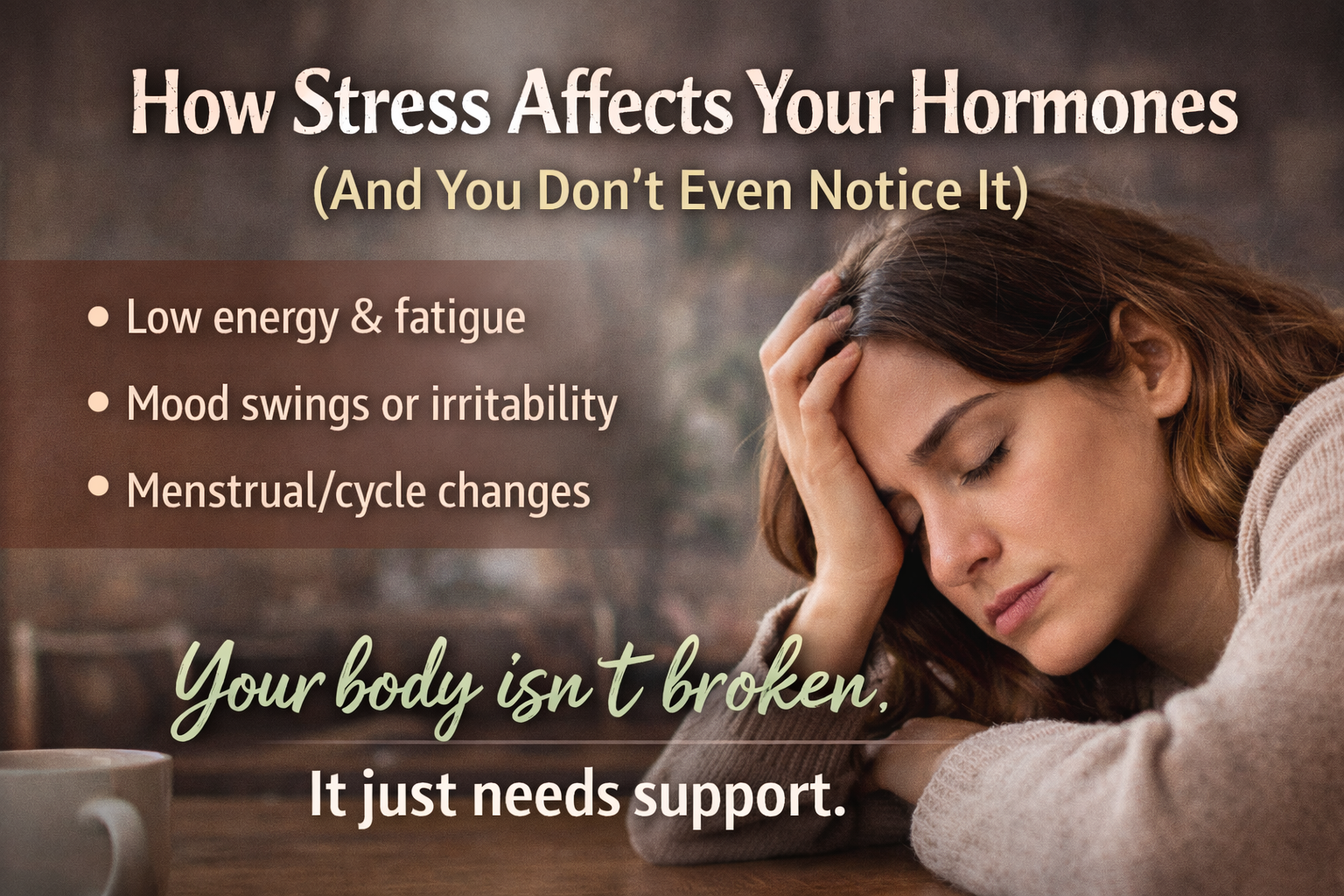
How Stress Affects Hormones (Even When You Think You're Fine)
You’re not “that stressed.”
You’re managing your work.
Handling your responsibilities.
Getting through your day like everyone else.
And yet… something feels off.
Low energy.
Mood swings.
Poor sleep.
A strange sense that your body isn’t in sync.
You might not call it stress.
But your body does.
The Subtle Way Stress Shows Up in Your Life
It doesn’t always look like panic or breakdown.
Sometimes it looks like:
- You feeling “fine” but constantly tired
- You getting irritated over small things
- You lying in bed but not feeling rested
- You pushing through days without pause
Life keeps moving.
So you keep going.
But inside, your body is quietly adjusting to that constant pressure.
What Stress Is Actually Doing Inside Your Body
Let’s simplify this:
Stress → Hormonal Signals → Body Response
When you experience stress (even mild, daily stress):
- Your body releases stress hormones
- These signals tell your system to stay alert, not relaxed
- Over time, this affects other hormones responsible for:
- Energy
- Mood
- Sleep
- Reproductive balance
This is where stress and hormonal imbalance begin to connect.
And the tricky part?
It happens slowly. Quietly.
That’s why many people ask:
“Can stress cause hormone imbalance?”
Yes—especially when it becomes constant, not occasional.
Stress doesn’t just stay in your mind.
It shapes how your body functions.
In fact, ongoing stress can influence fatigue, sleep disturbance, and hormonal rhythm over time.
Signs Your Hormones Might Be Affected by Stress
You may not notice it immediately, but your body gives subtle signals:
- You feel tired even after resting
- Your mood changes more than usual
- You experience brain fog or low focus
- Your sleep feels light or disturbed
- You feel low motivation or emotional exhaustion
- Your body feels “out of rhythm”
- You notice changes in energy, cycle, or libido
These are not random.
They are often the effects of stress on body hormones.
A Gentle Perspective You Probably Need
Pause for a moment.
Your body is not malfunctioning.
It’s responding—intelligently—to what it’s experiencing.
When stress stays for too long,
your body shifts into a protective mode.
That can look like imbalance.
But it’s actually adaptation.
You don’t need to fight your body.
You need to support it before the imbalance deepens.
This is exactly where preventive care matters—
supporting your system early instead of waiting for a bigger issue.
Supporting Your Hormonal Balance Naturally
Instead of extreme fixes, think gentle alignment:
1. Reduce Internal Pressure
Not everything needs urgency.
Even small pauses during the day help your system reset.
2. Create Recovery Moments
Your body needs breaks—not just sleep, but moments of calm.
3. Nourish Consistently
Irregular eating patterns can add stress to your system.
Balanced nutrition supports hormonal signals.
4. Consider Herbal Support
Certain herbs are traditionally used to support stress and hormonal balance:
- Ashwagandha → helps the body adapt to stress
- Maca → supports energy and hormonal vitality
- Shatavari → supports hormonal rhythm (especially in women)
- Gokshura → supports vitality and physical balance
These work gradually—supporting your system instead of forcing it.
Small, Realistic Steps That Make a Difference
Start simple. No overwhelm.
- Take 10 minutes daily with no stimulation (no phone, no noise)
- Step outside for natural light in the morning
- Keep your sleep and wake timing consistent
- Eat at regular intervals
- Reduce caffeine dependency gradually
- Notice when your body feels overwhelmed—and pause
These are not big changes.
But they signal safety to your body.
And safety is what your hormones respond to.
A Thought to Carry Forward
Stress doesn’t always feel loud.
Sometimes it’s just… constant.
And that constant pressure slowly shapes your internal balance.
You don’t have to wait for something to go wrong.
Start supporting your body before it starts asking louder.
FAQ Section
— Always consult a healthcare provider before starting new supplements, especially if you have underlying conditions.